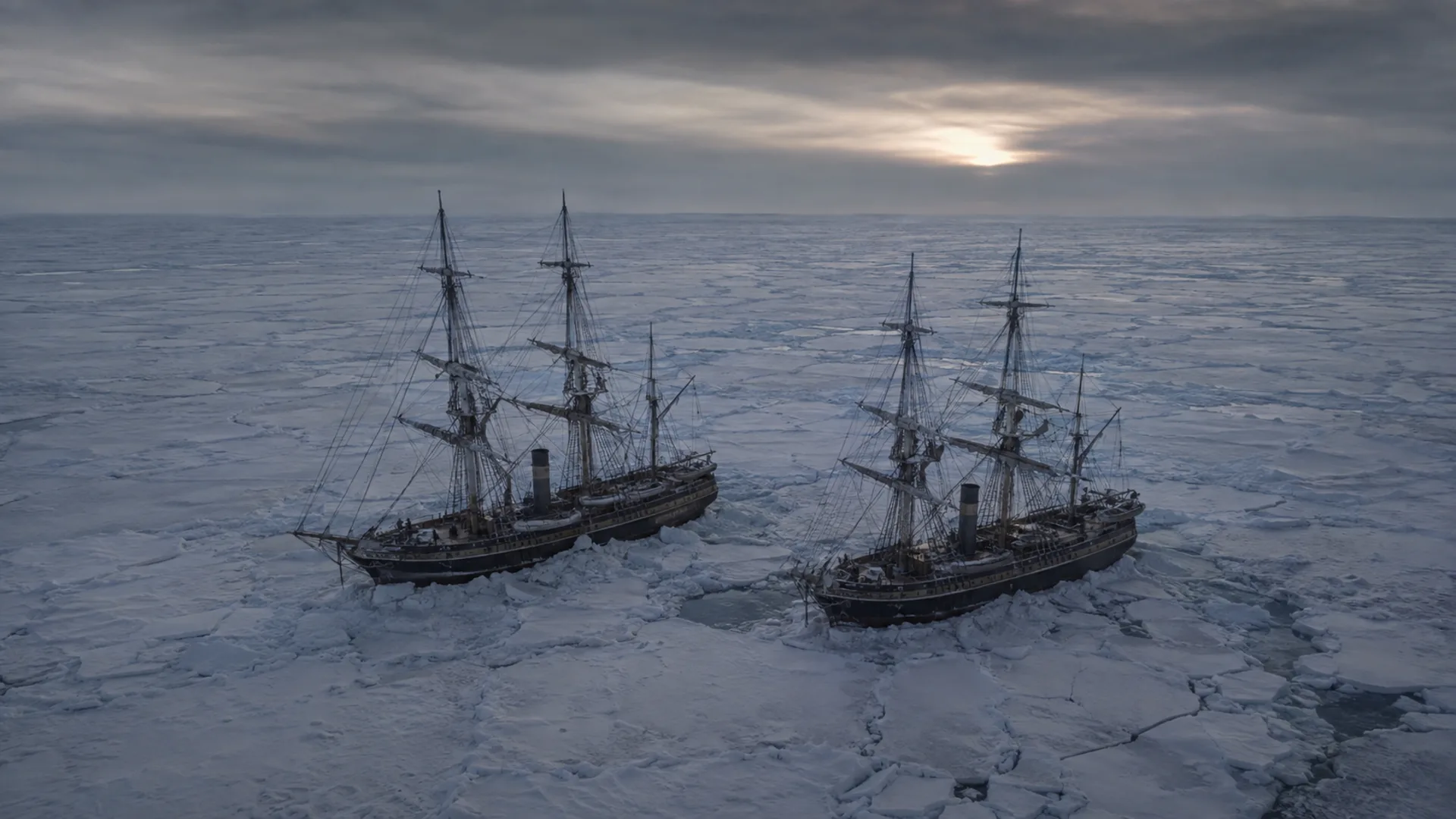
In May 1845, 129 men left Britain aboard two reinforced ships to search for the Northwest Passage. Less than three years later, the ships were trapped, their commander was dead, and the survivors were marching south without knowing whether they could return.
An expedition built to last for years
HMS Erebus and HMS Terror were not improvised vessels. They had reinforced hulls, navigation equipment, scientific instruments, provisions, and auxiliary steam engines. Their mission was to complete a sea route connecting the Atlantic and Pacific oceans through northern Canada.
Sir John Franklin commanded the expedition, while Francis Crozier led Terror. At the beginning, the project seemed to combine enough organization, technology, and experience to face the polar waters.
The last confirmed sighting
After crossing the Atlantic, the two ships entered the Canadian Arctic during the summer of 1845. In July, whalers saw them in Baffin Bay. It would be the last confirmed meeting between the expedition and European observers.
The men continued west and spent their first winter on Beechey Island. Three crew members died and were buried there, a sign that the environment was already demanding a price even though the expedition still appeared to be under control.
The ice closes the route
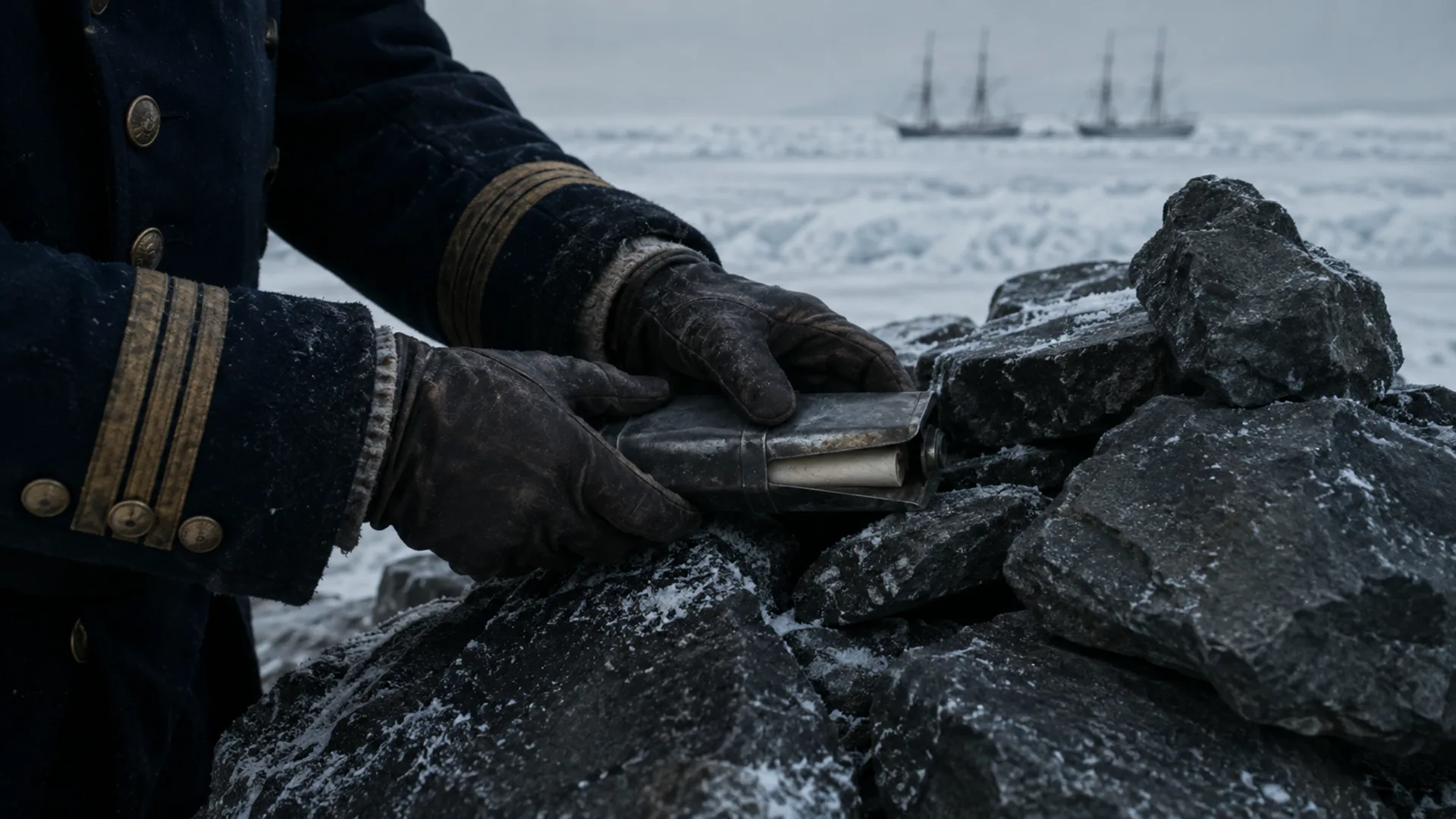
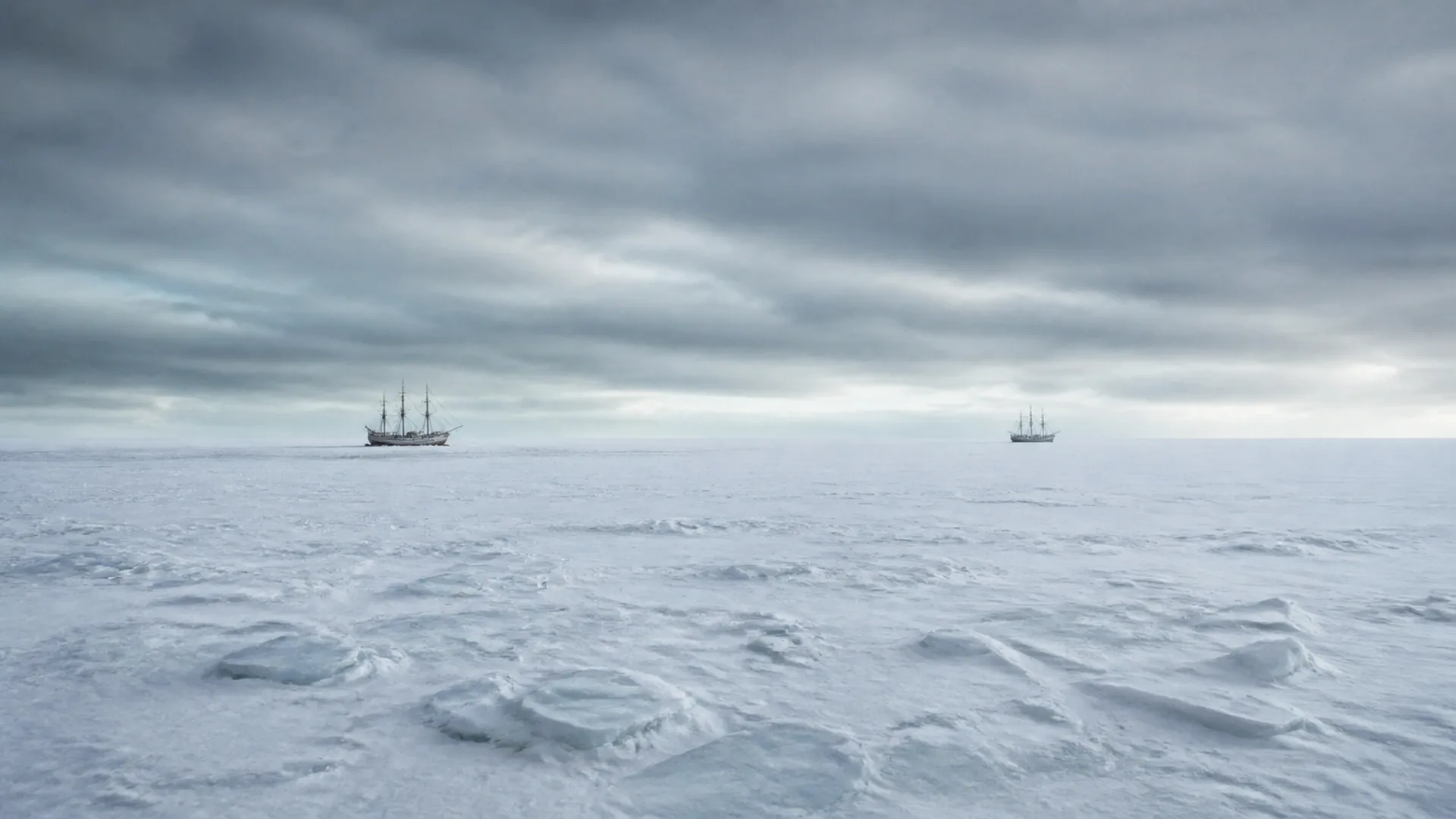
When summer returned, the ships left Beechey Island and continued toward the Arctic Archipelago. In September 1846, the ice closed around Erebus and Terror near King William Island.
At first, the immobilization might have looked like a seasonal pause. The problem was that winter returned before a safe passage opened. Time stopped being a detail of the voyage and began reducing the crew’s options month after month.
The message that changed the investigation
In 1847, a record still reported that the men were well. After that, the situation worsened. Franklin died in June 1847, and neither ship managed to escape the ice.
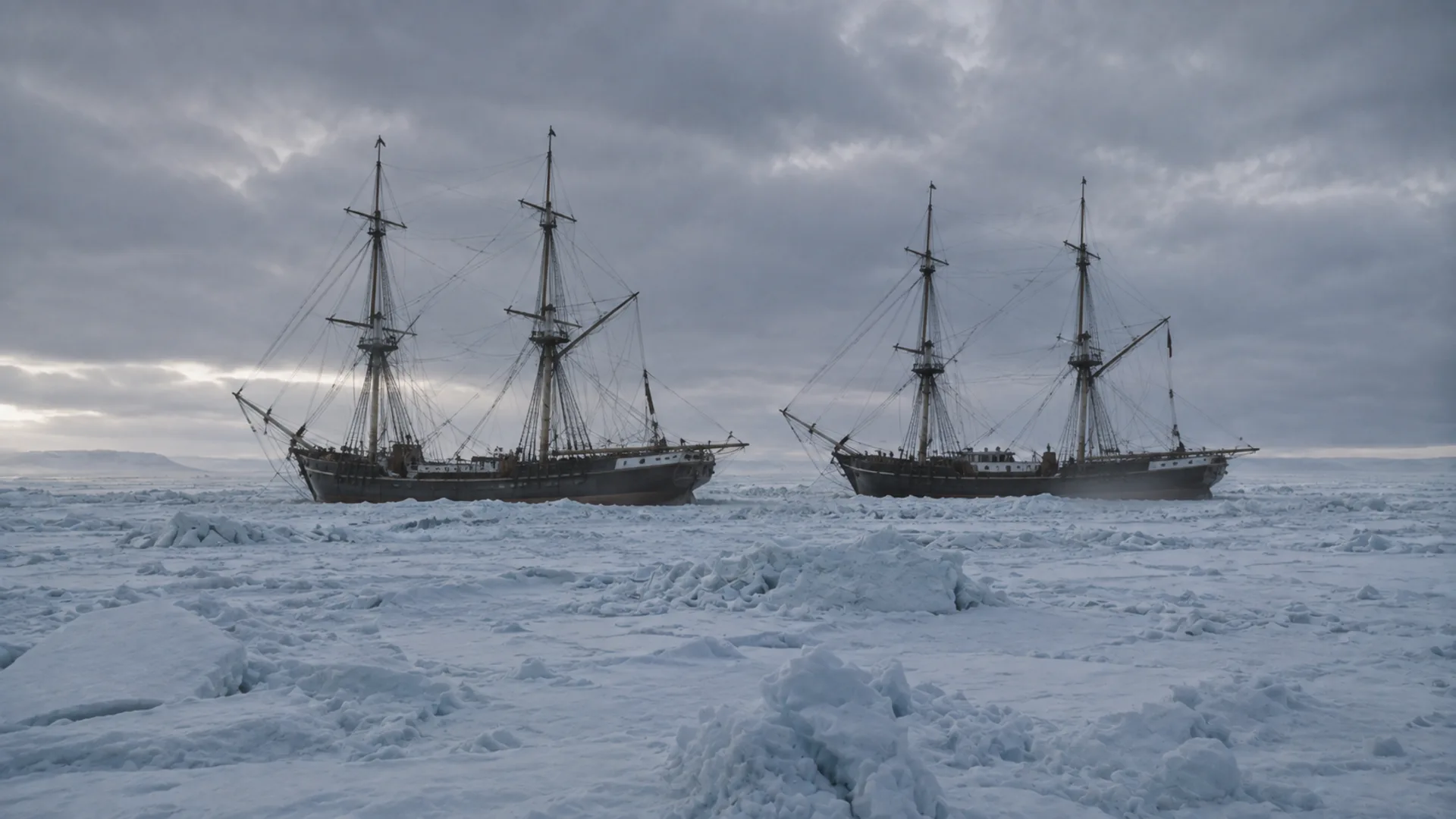
In April 1848, officers left a message inside a stone cairn. It stated that the ships had been abandoned and that 105 men would travel south toward the Back River. This is one of the case’s most important certainties: the maritime expedition had become a survival march.
It confirms that the ships were trapped, that Franklin had died, and that the vessels were abandoned. It does not record how each man died or describe the final days of the march.
A column on the ice
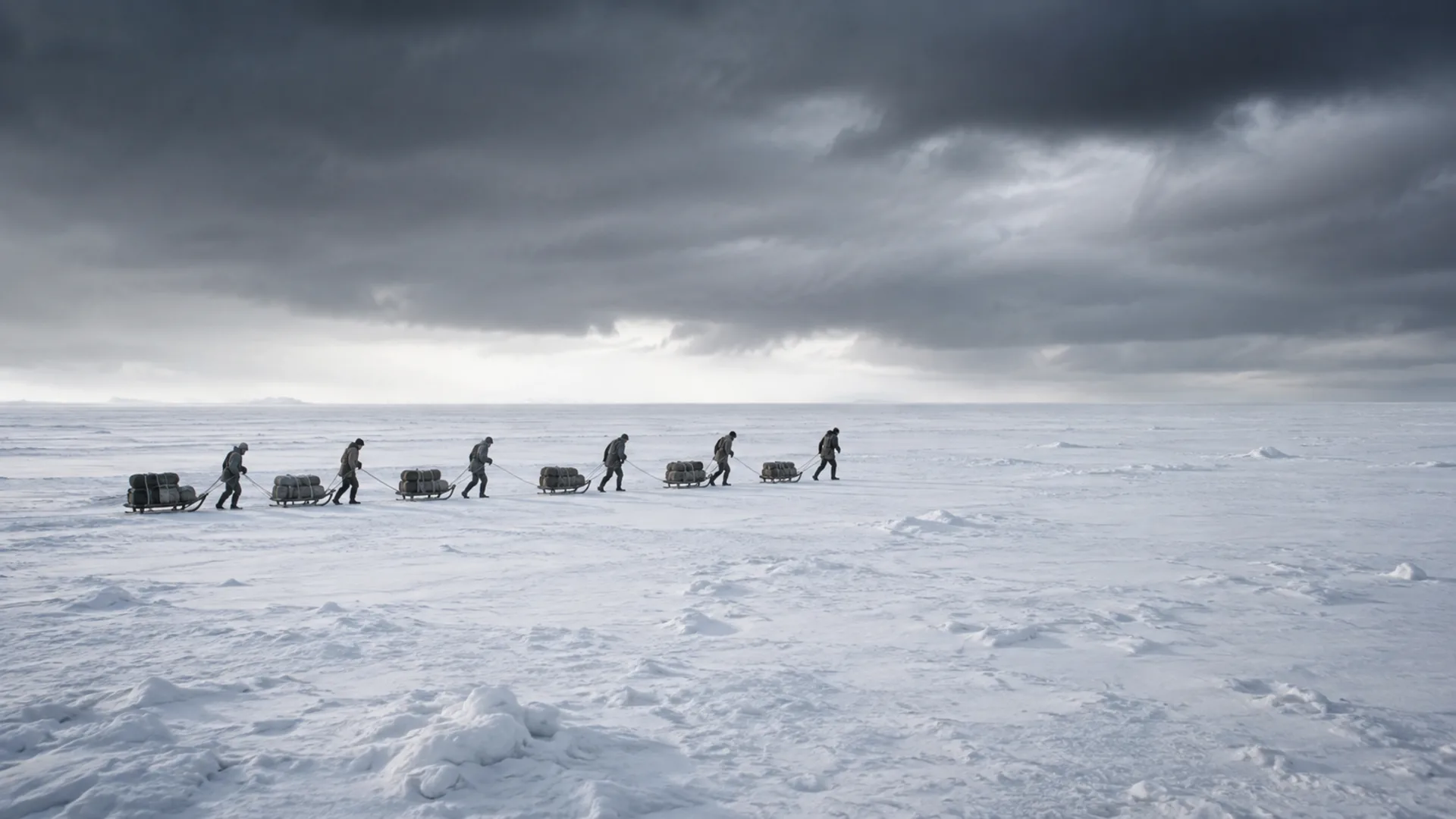
The survivors took boats, sledges, weapons, clothing, barrels, and provisions. Each object could be useful, but each also increased the weight that had to be dragged across a landscape without roads, with broken ice, rock, snow, and few food sources.
Inuit accounts recorded by investigators indicated that European men had been seen moving south and that bodies and objects appeared along the likely route. This information was decisive, although some European explorers underestimated local knowledge for many years.
Fact, hypothesis, and legend
Along the route, investigators found boats, clothing, utensils, graves, and human remains. Some bone fragments were interpreted as possible signs of cuts, but that evidence alone cannot explain the fate of every crew member.
Explanations involving starvation, disease, extreme cold, lead exposure, and logistical failure have also been discussed. These factors may have contributed to the collapse, but no single piece of evidence turns any reconstruction into a complete account.
The safest conclusion is that no survivor returned to record what happened. From that point onward, direct evidence, archaeological interpretation, and later speculation must be kept separate.
The ships reappear
For more than a century, the fate of Erebus and Terror remained unknown. Between 1848 and 1880, several expeditions searched for the ships and the 129 men. The searches also mapped large parts of the Canadian Arctic.
In the twenty-first century, researchers combined old maps, underwater archaeology, sonar, regional knowledge, and Inuit accounts. In 2014, the wreck of HMS Erebus was located. In 2016, HMS Terror was found as well in Canadian Arctic waters.
The discoveries confirmed that both ships had moved after the abandonment and provided new evidence about their final movements. Cabins, instruments, and objects preserved underwater help researchers study life aboard the ships, but they do not form a final message left by the men.
What we still do not know
We know that the ships became trapped, Franklin died, the vessels were abandoned, and the survivors attempted to travel south. We also know that none of the 129 men returned and that both ships were found only many decades later.
We still do not know exactly when the groups separated, how each person died, or what decisions were made during the final days. Finding the wrecks solved a major part of the mystery, but it did not return the complete narrative of the march.
Why does the story remain open?
The Franklin expedition did not vanish without clues. It left documents, objects, reports, graves, and two ships preserved on the seabed. The problem is that none of these clues tells the whole story alone.
The case remains compelling because its answer does not require a supernatural legend. It lies in the combination of human decisions, an extreme environment, Inuit knowledge, and incomplete evidence. The ice gave the ships back, but it still holds the men’s final steps.
Frequently asked questions
How many men took part in the expedition?
A total of 129 men left aboard the two ships in 1845.
What happened to the ships?
Erebus and Terror became trapped in the ice, were abandoned in 1848, and sank later. Their wrecks were found in 2014 and 2016.
Does the message explain everything?
No. It confirms essential events, but it does not describe the final days or the individual fate of every man.