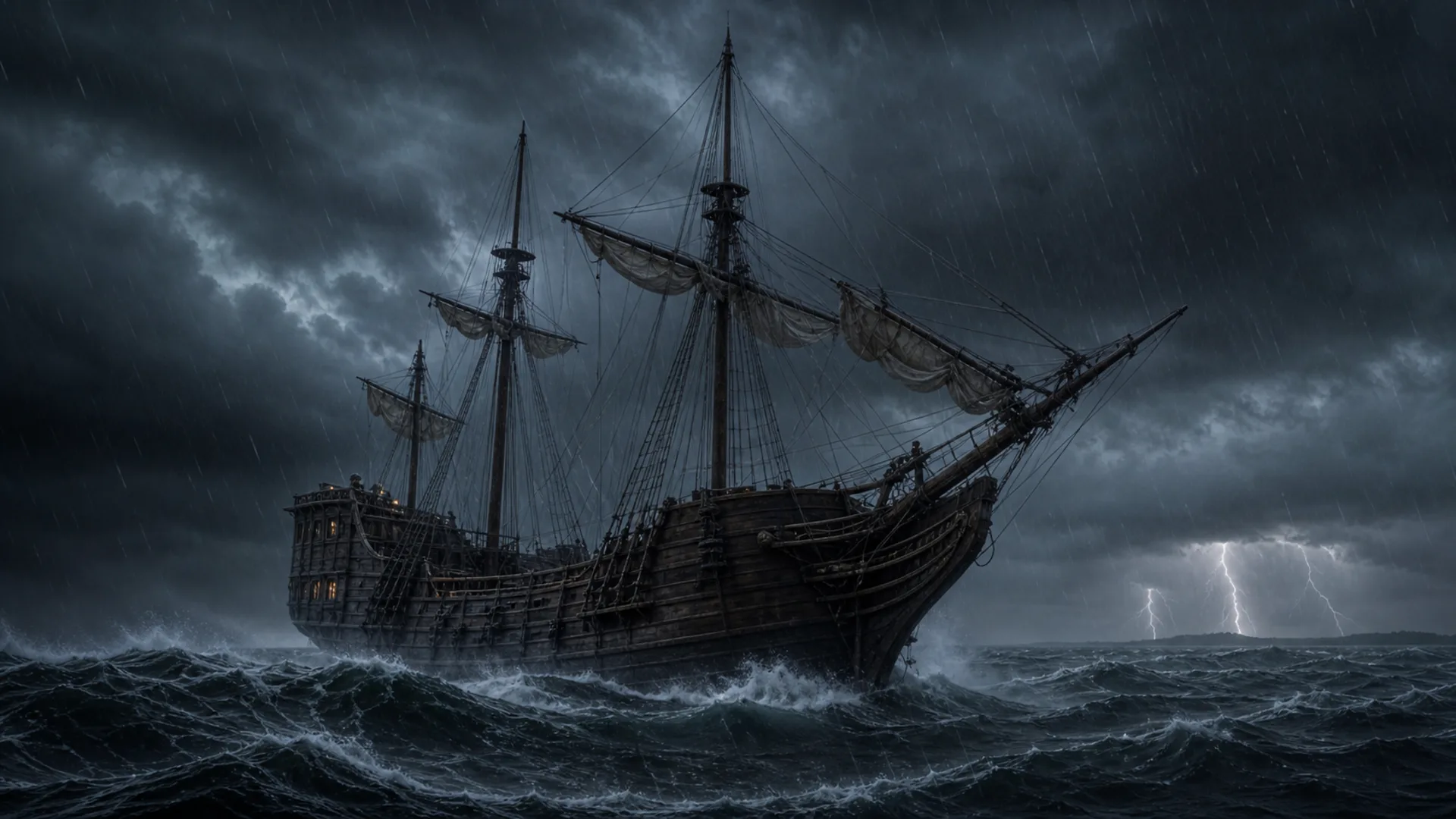
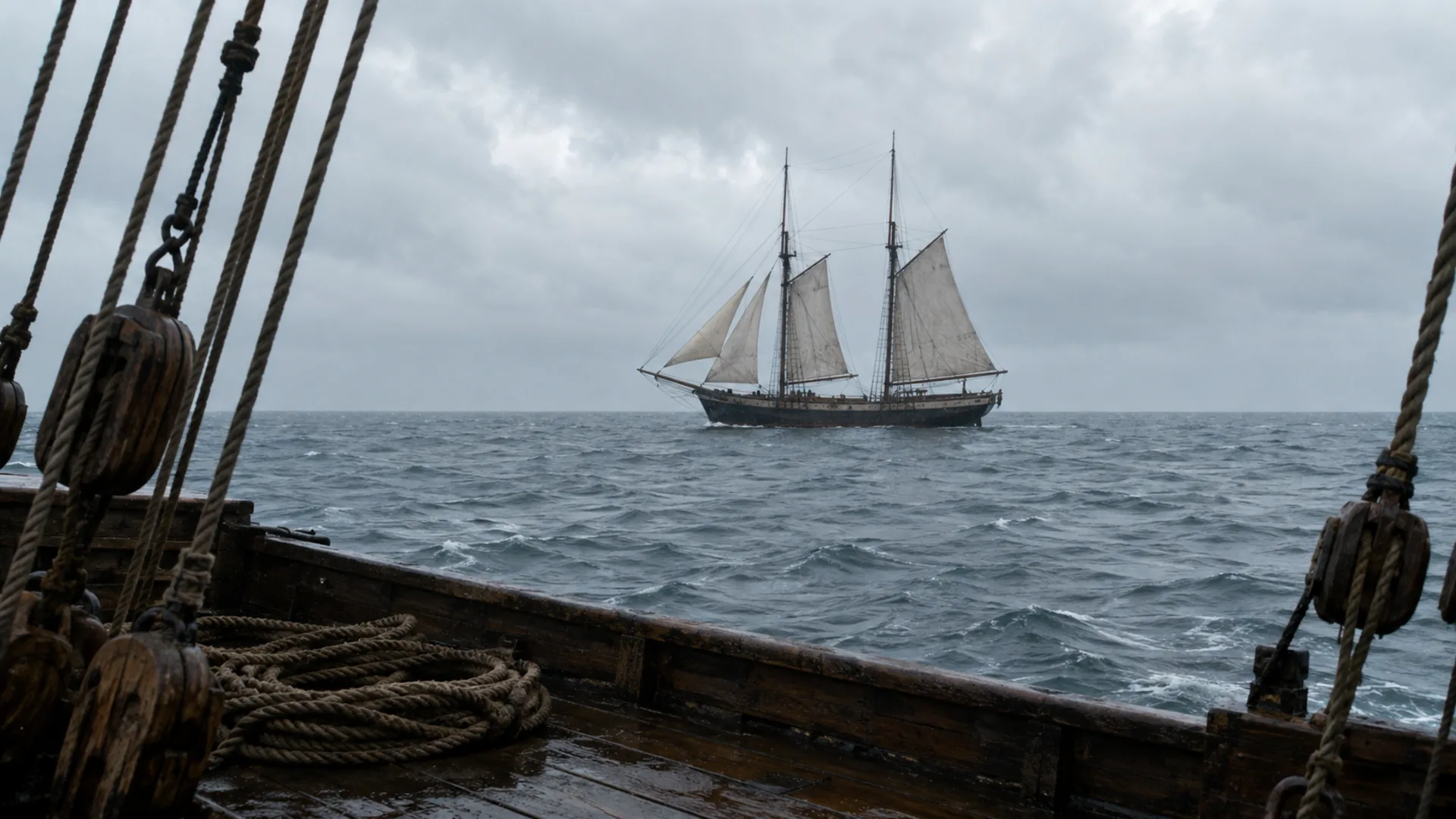
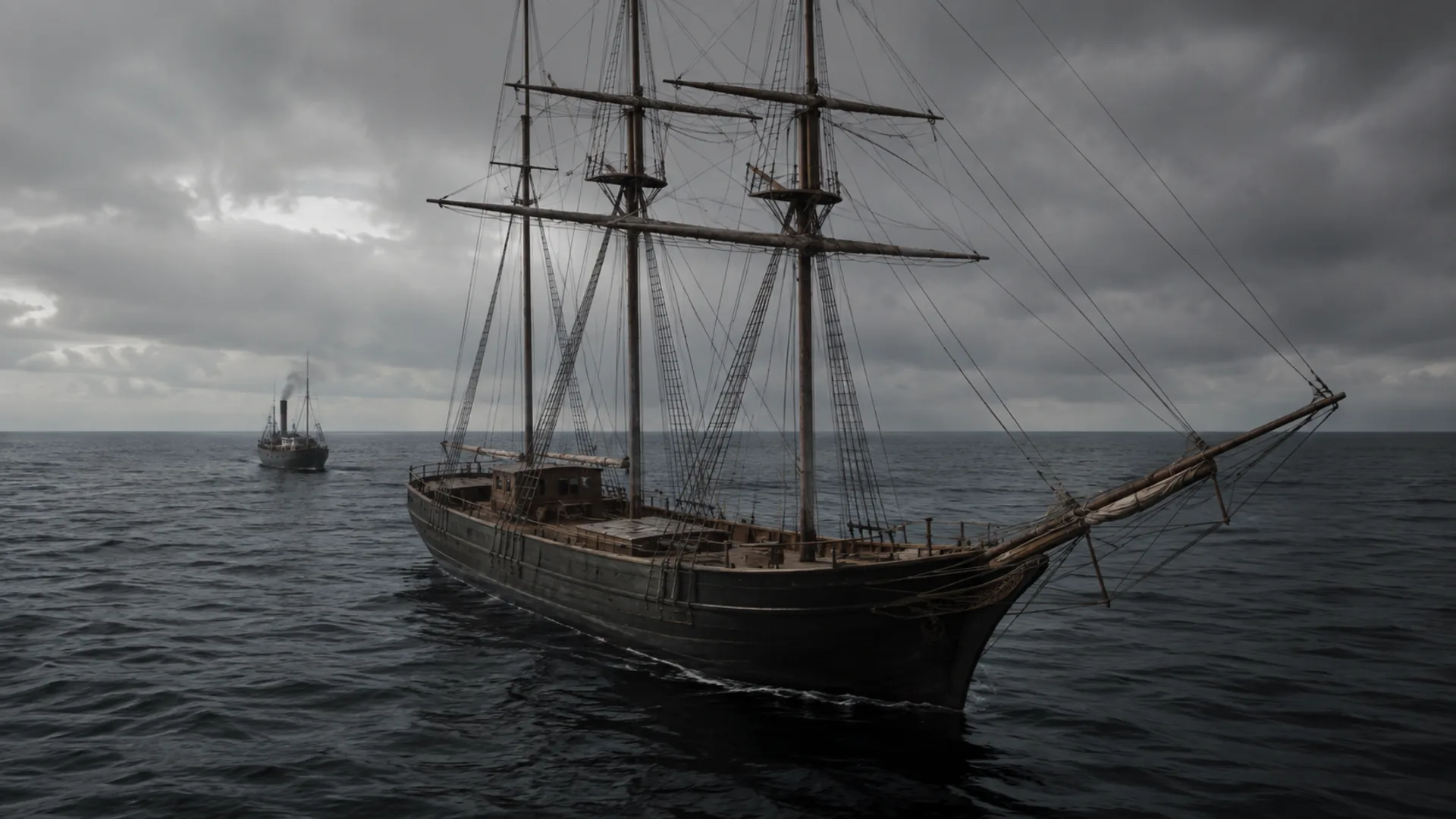
In December 1872, another ship found the Mary Celeste drifting across the Atlantic. Her sails were still partly raised, her cargo remained below deck, and the vessel appeared seaworthy. The detail no one could explain was that there was nobody on board.
The ship that kept sailing alone
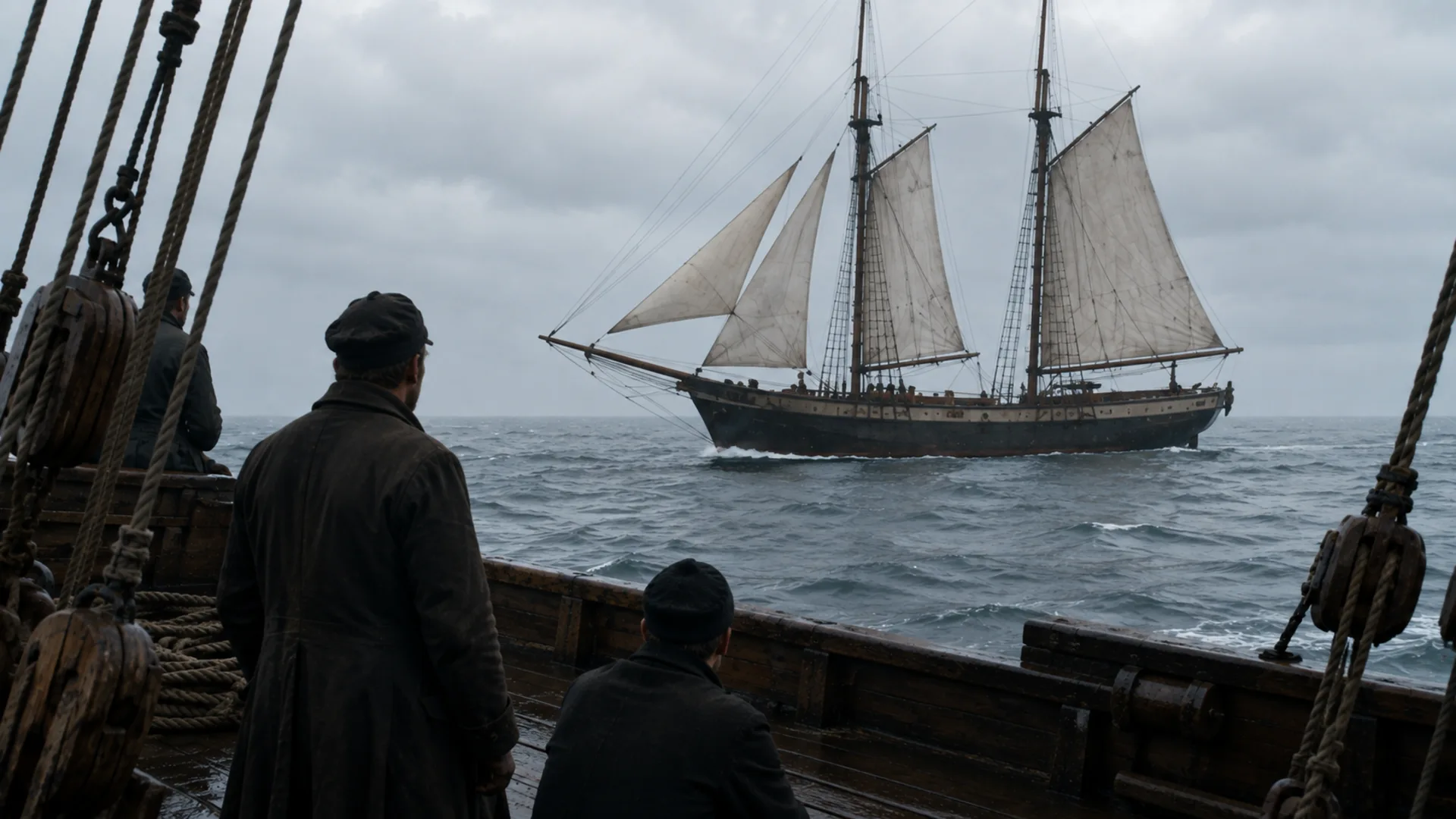
The Mary Celeste had left New York on November 7, bound for Genoa. Nearly a month later, Captain David Morehouse of the Dei Gratia spotted her between the Azores and the Portuguese coast. The ship’s erratic movement led his crew to come closer and offer assistance.
When the sailors climbed aboard, they found a vessel abandoned but not wrecked. There were no passengers, officers, or sailors hiding below deck. The Mary Celeste was empty, and that discovery turned a maritime incident into one of the ocean’s most enduring mysteries.
Who had vanished?
Captain Benjamin Briggs commanded the ship and was traveling with his wife, Sarah, and their two-year-old daughter, Sophia. Seven crew members completed the group. All ten disappeared together, while the ship showed no clear signs of a fight or an attack.
The Mary Celeste carried about 1,700 barrels of industrial alcohol. Most of the cargo remained in the hold, along with personal belongings and provisions. Anyone trying to steal the ship would have left behind the very things that could have made the operation profitable.
The ship was not found sinking. It was still afloat and was sailed to Gibraltar by the Dei Gratia crew.
The first clue was the missing lifeboat
The lifeboat was gone. That clue narrows the possibilities: at some point, all ten people left the Mary Celeste in the smaller boat. What we do not know is why they left, or whether they intended to return.
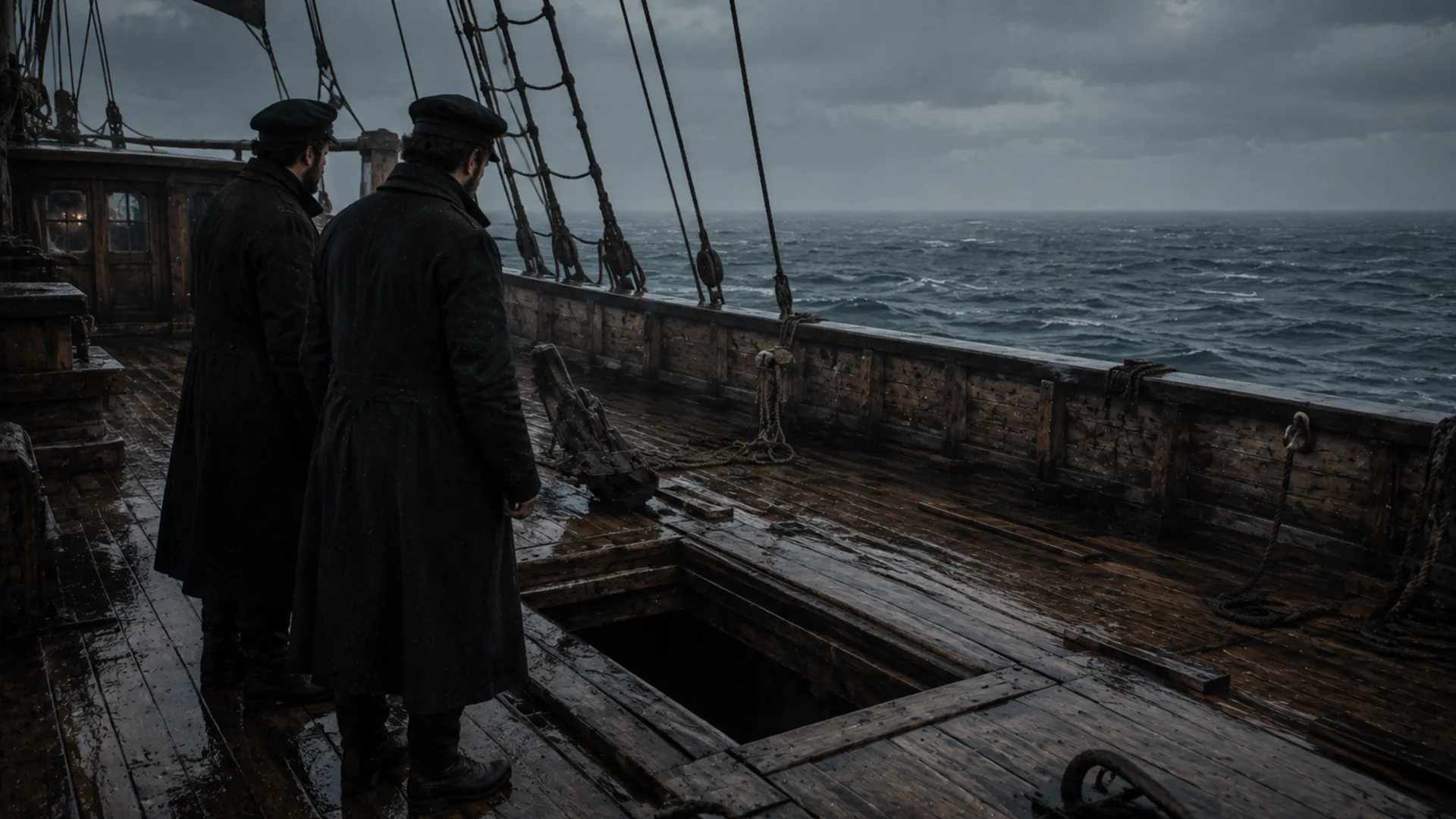
The deck offered no simple answer. There was weather-related damage and some equipment was out of place, but nothing proved a battle. The ship’s log also contained no entry that could explain the disappearance.
The log ends before the answer
The last known entry was written before the ship was discovered and does not describe an attack, a revolt, or a final emergency. That silence does not prove that nothing happened afterward; it only shows that the surviving record stops before the crucial minutes.
Without a witness or a final account, every detail has to be handled carefully. An object out of place may be a genuine clue, but it could also have been moved by the sea or by the crew during an attempt to abandon the vessel.

The alcohol vapor theory
One plausible explanation involves the cargo. A leak or a buildup of flammable vapor might have frightened the crew without producing an explosion capable of destroying the ship. The captain may have ordered a temporary evacuation after judging that the Mary Celeste faced an immediate danger.
This is a hypothesis, not a proven conclusion. It explains why the group might have taken the lifeboat and why the ship remained largely intact, but it does not explain why nobody returned or reached another vessel.
A storm, a mistake, and a dangerous distance
Another possibility is that a combination of rough weather, water in the hold, navigation problems, or a mistaken reading of the situation made the captain consider the ship unsafe. At sea, a temporary decision can become fatal when the lifeboat separates from the main vessel.
The scenario does not require anything supernatural. If the line connecting the boat to the ship broke, or if wind and current increased the gap, the Mary Celeste could drift onward while its occupants lost the ability to return.
What about the more dramatic theories?
Piracy, mutiny, and murder were considered over the years, but no decisive evidence supports those versions. The absence of bodies and a clear fight scene fed the imagination, yet a possibility is not the same as a fact.
Insurance fraud was also suggested, but that theory would require the captain and the entire crew to take part in a plan that still offers no explanation for the missing boat. The ghost-ship legend grew out of the gap between the evidence and the answer people wanted to find.
What survives careful analysis?
The established facts are few but consistent: the Mary Celeste was found without its occupants, remained seaworthy, still carried cargo and personal belongings, and had lost its lifeboat. From that point onward, every reconstruction is a hypothesis.
The most coherent explanation is that a perceived danger led the group to leave temporarily, probably in conditions that made returning impossible. Even so, there is not enough evidence to identify the decisive danger or to determine what happened to the ten people.
The mystery is not the ship, but the decision
The Mary Celeste did not disappear. It was found. The question that remains is why experienced people would abandon a vessel that could still sail. The answer may have begun with a small danger, a rapid decision, and a distance that grew too quickly.
That is why the case remains so compelling: the ocean did not erase every clue, it left just enough clues to keep the story open.
Frequently asked questions
Was the Mary Celeste a ghost ship?
Not in a supernatural sense. It was a real ship found without its crew, and “ghost ship” is a popular description of the mystery.
Was piracy ever proven?
No. Investigators found no conclusive proof of an attack, mutiny, or murder.
Do we know what happened to the crew?
No. The fate of the captain, his family, and the seven crew members was never confirmed.