
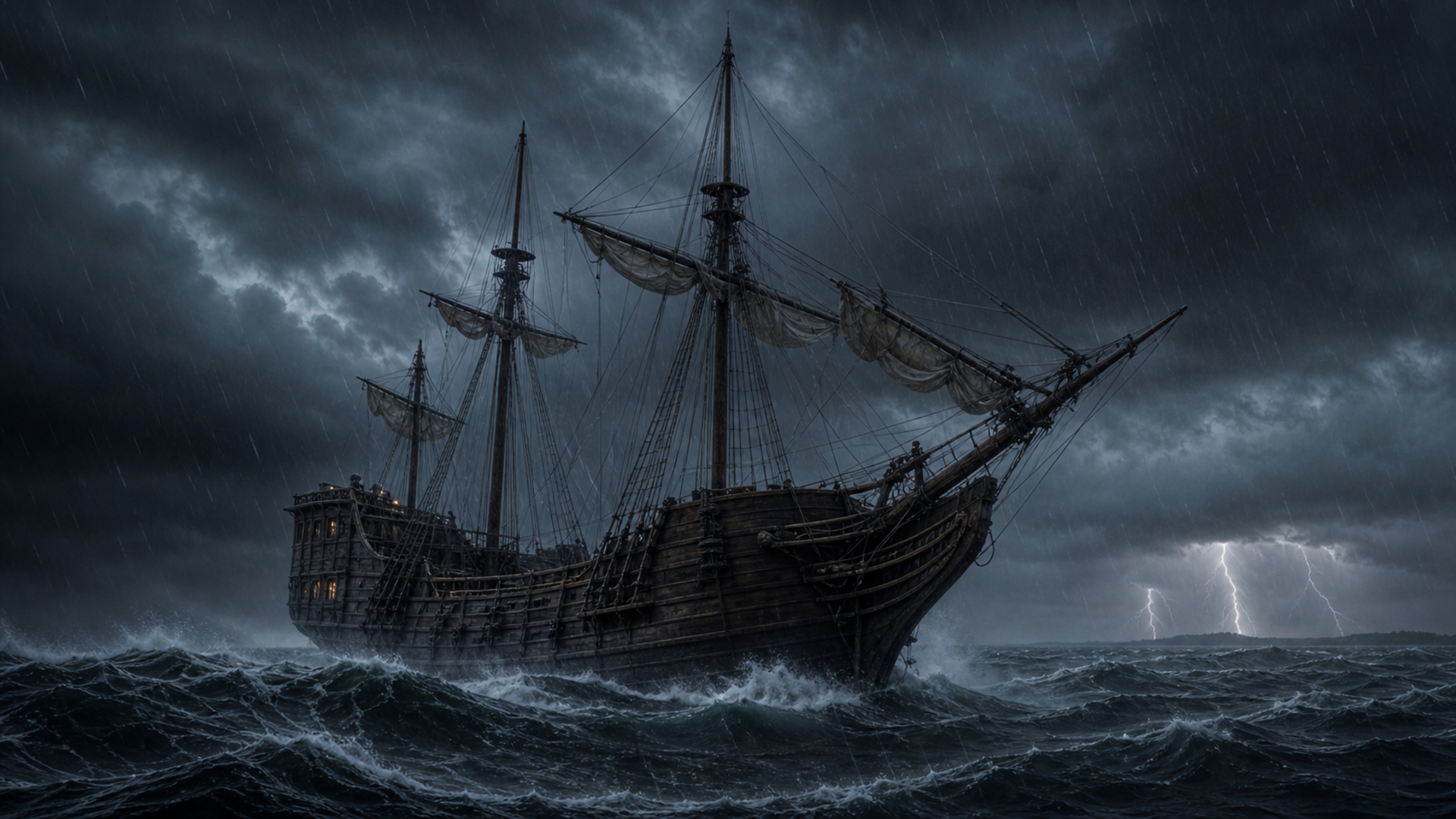
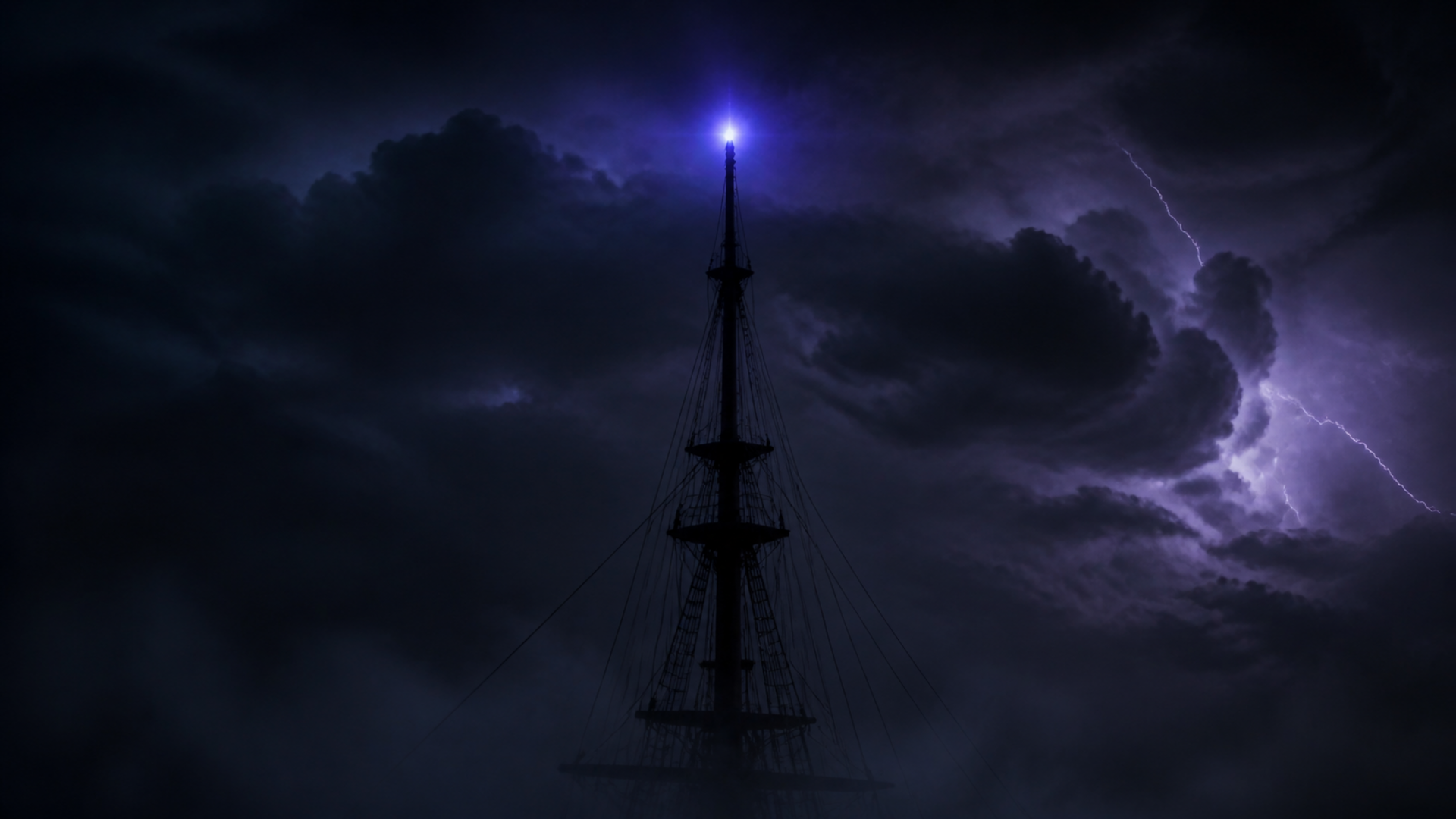
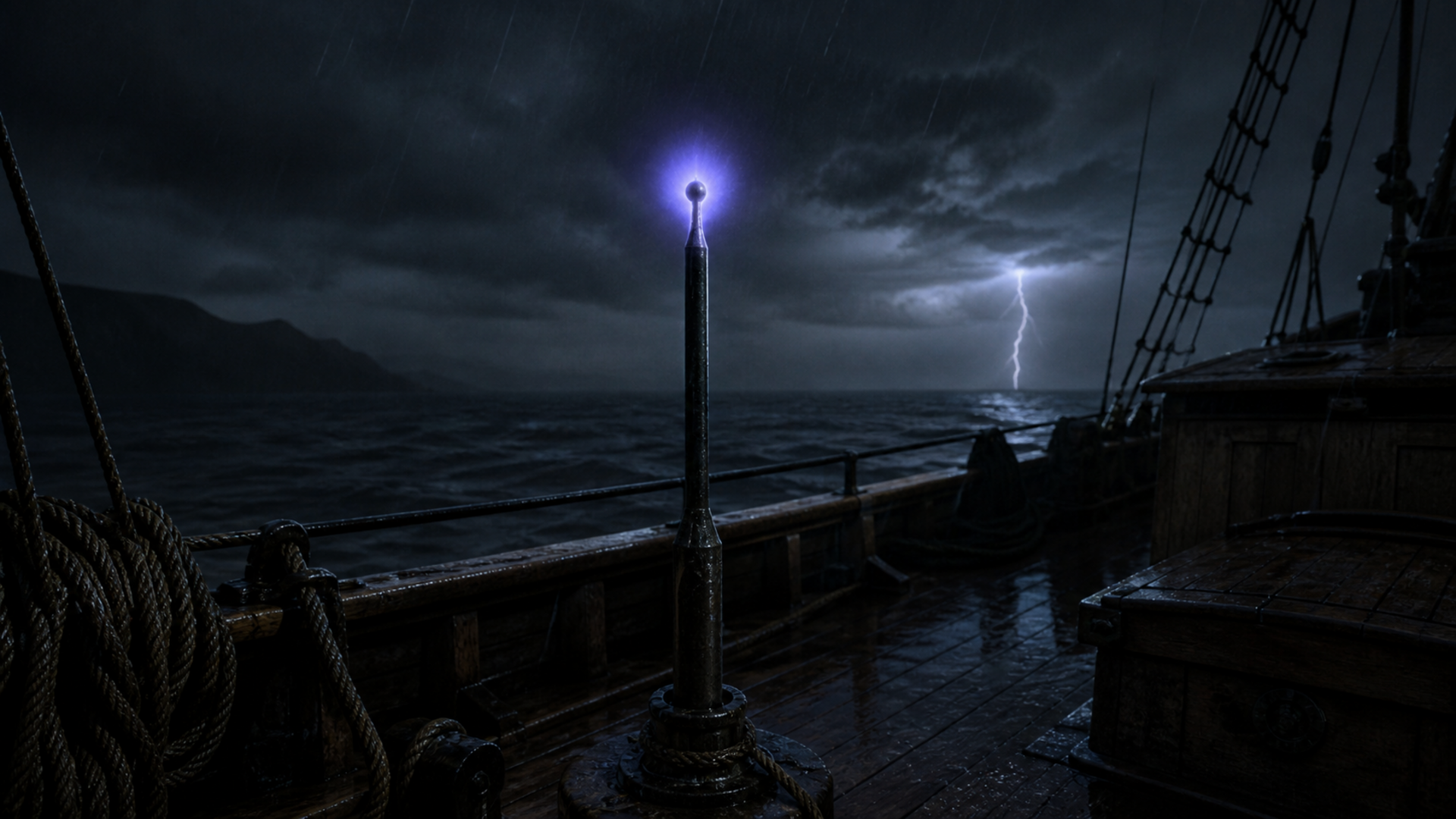
For centuries, sailors reported a blue or violet glow appearing at the tips of masts during storms. The scene looked supernatural. The phenomenon was real, however — and its explanation lies in atmospheric electricity.
A light that seemed impossible
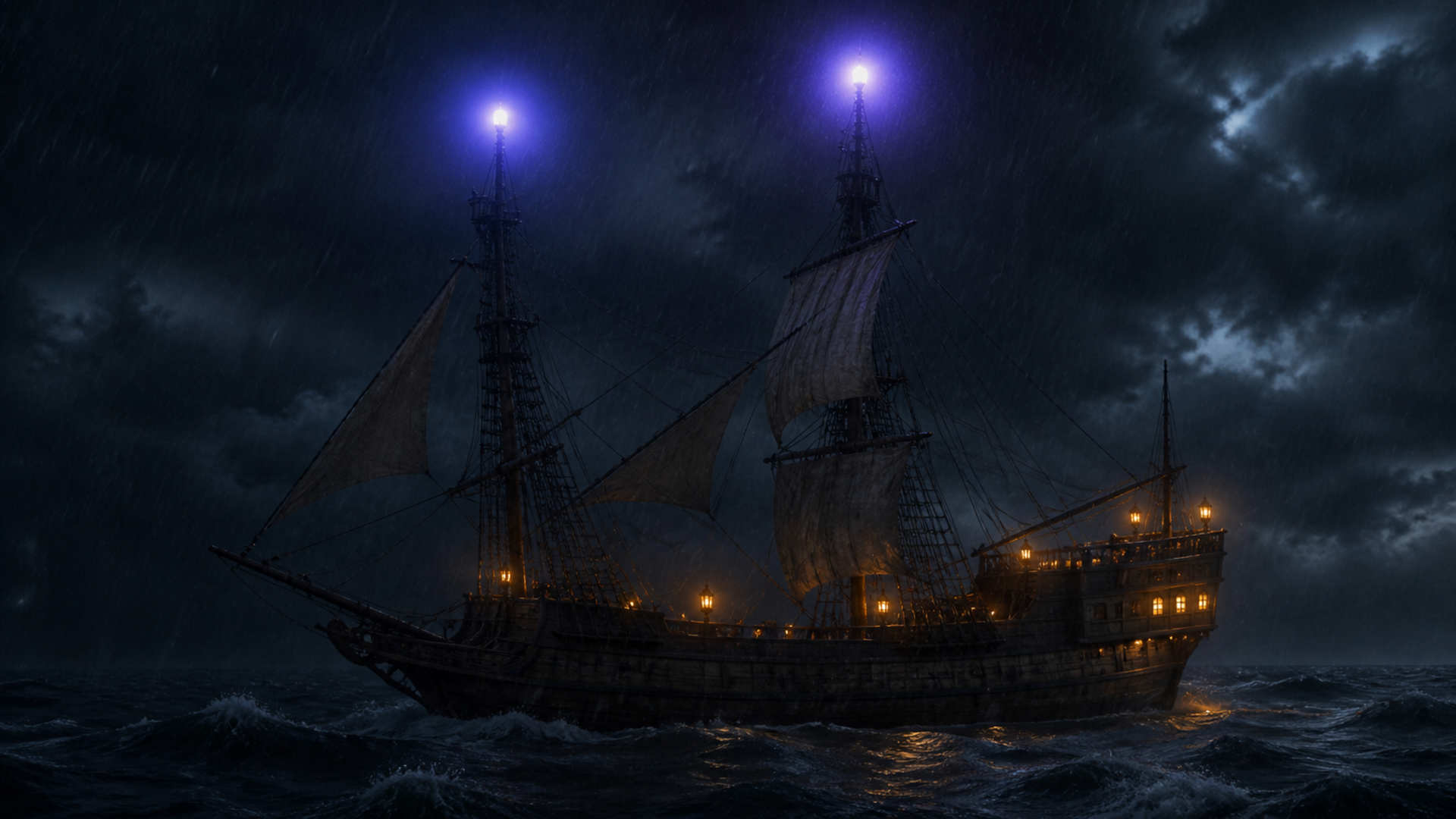
Imagine crossing a storm in a wooden ship when a small light appears high above the deck. It looks like a flame, but it produces no smoke, consumes no fuel and does not seem to spread.
Earlier observers had no modern instruments or vocabulary for the event. They had observation, tradition and the explanations available in their own time.
How a name became part of the mystery
The phenomenon became known in English as Saint Elmo’s fire. The name is connected with Saint Erasmus, also called Saint Elmo, a reference that spread through Mediterranean maritime traditions.
In some accounts, the light could be read as protection. In others, it was a warning. The glow did not change; its meaning did.
Older traditions also linked two lights with Castor and Pollux. These associations show how one physical observation could acquire different cultural interpretations.
The clue was where the light appeared
The glow’s behavior offered an important clue. It did not run across the deck like a fire, and it did not move away like a distant light on the horizon. It remained attached to the tip of a mast or another elevated structure.
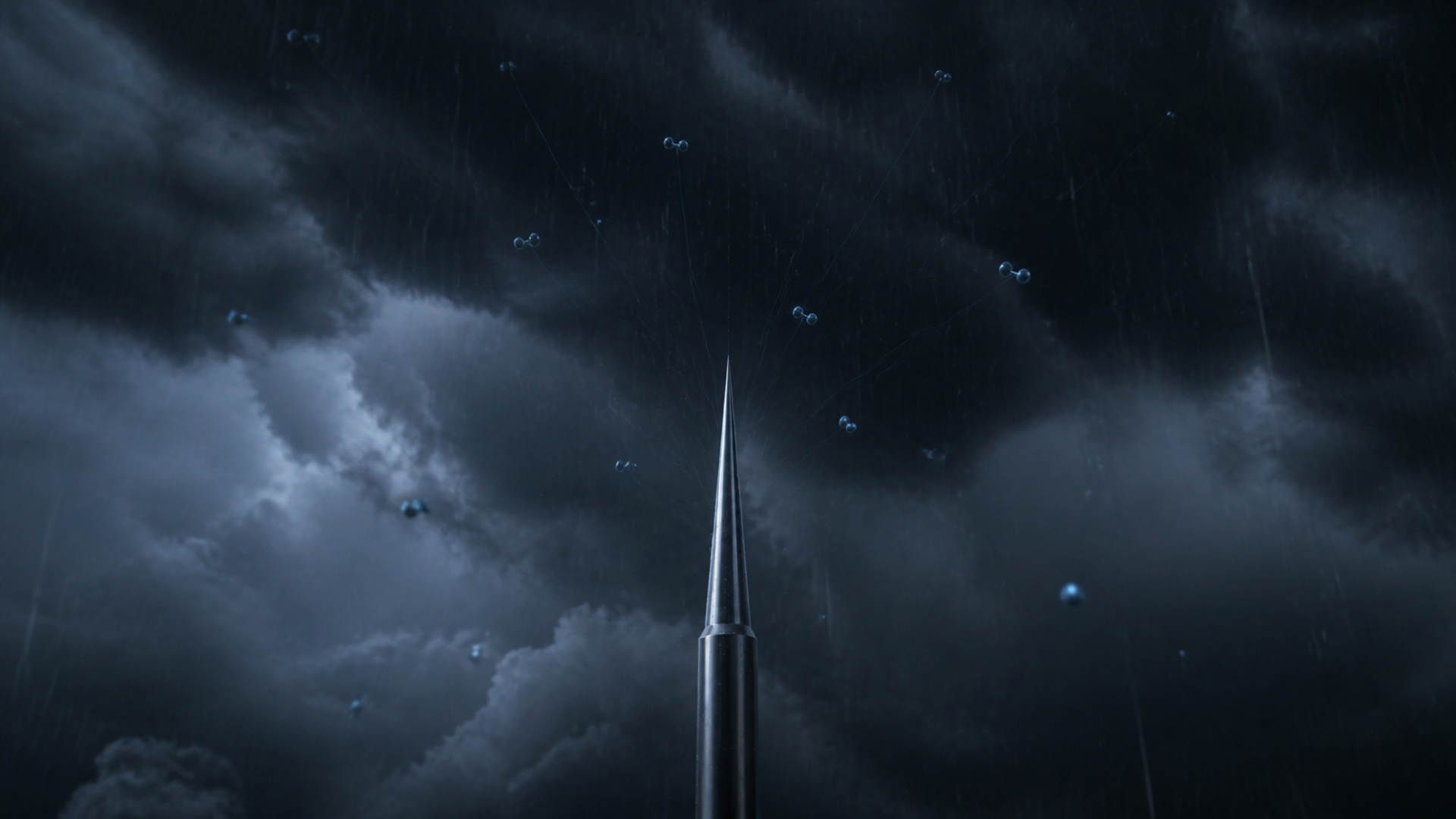
Similar phenomena can occur on tall, pointed objects such as towers, antennas, trees and parts of aircraft. The shape matters because electrical charge tends to concentrate at sharp points.
What happens in the air
When the electric field is strong enough, the air near a pointed conductor can become ionized. In simple terms, some molecules gain enough energy to release electrons and form an electrically active region.
As those particles return to lower-energy states, they can emit light. The result is a corona discharge: a localized blue or violet glow that does not depend on combustion.
It was not an ordinary flame
The appearance explains the nickname, but not the mechanism. An ordinary flame involves combustion, fuel and hot gases. A corona discharge is a luminous electrical phenomenon and can occur without consuming the object.
This also explains why the light can remain attached to a mast tip while the ship rolls. The glow follows the region where the electric field is concentrated instead of behaving like a loose fire.
Fact, legend and hypothesis
Fact: Saint Elmo’s fire is associated with corona discharges produced by strong electric fields, especially around pointed conductors.
Legend: a saint personally appeared to light the mast.
Hypothesis: every ancient account describes exactly the same event. A historical text may record a real observation, but it cannot prove every detail of the scene by itself.
Why science does not erase the experience
The sailors were not necessarily inventing what they saw. They observed a light in a difficult situation and tried to understand it with the intellectual tools available to them.
Science changes the interpretation; it does not erase the experience. The light was real. The unsupported supernatural explanation was the mistake.
Frequently asked questions
Is Saint Elmo’s fire lightning?
Not exactly. It is a localized corona discharge, while lightning is a much more intense and extensive electrical discharge. Both can be associated with strong atmospheric electric fields, but they are not the same phenomenon.
Does it happen only on ships?
No. Similar glows can appear on other tall or pointed objects, including towers, aircraft and structures exposed to strong electric fields.
Why is the glow often blue or violet?
The color depends on the gases involved, the discharge intensity and the viewing conditions. Blue or violet is common in descriptions, but the appearance can vary.