In 1932, Australia sent soldiers to help wheat farmers deal with emus. The birds scattered, the pursuit stretched across open country, and a short wildlife-control effort became one of history’s strangest military stories.
Machine guns in a wheat field sound like the start of a battle. In Western Australia, the targets were emus moving through farmland. “Emu War” became the lasting nickname, but the episode was not a formal war — and the familiar punchline leaves out the problem farmers were trying to solve.
The pressure on the wheat farms
Farmers in the Campion district were already dealing with harsh economic conditions and difficult seasons. Some were former servicemen who had settled on agricultural land after the First World War. When large groups of emus moved through their crops, the damage added to the pressure on farms with little room for another setback.
The birds fed among the wheat and passed through fences, leaving gaps that could expose fields to further damage. For growers, this was a practical problem with consequences for their livelihoods, not a comic story about an army and a flock.
A military answer to a wildlife problem
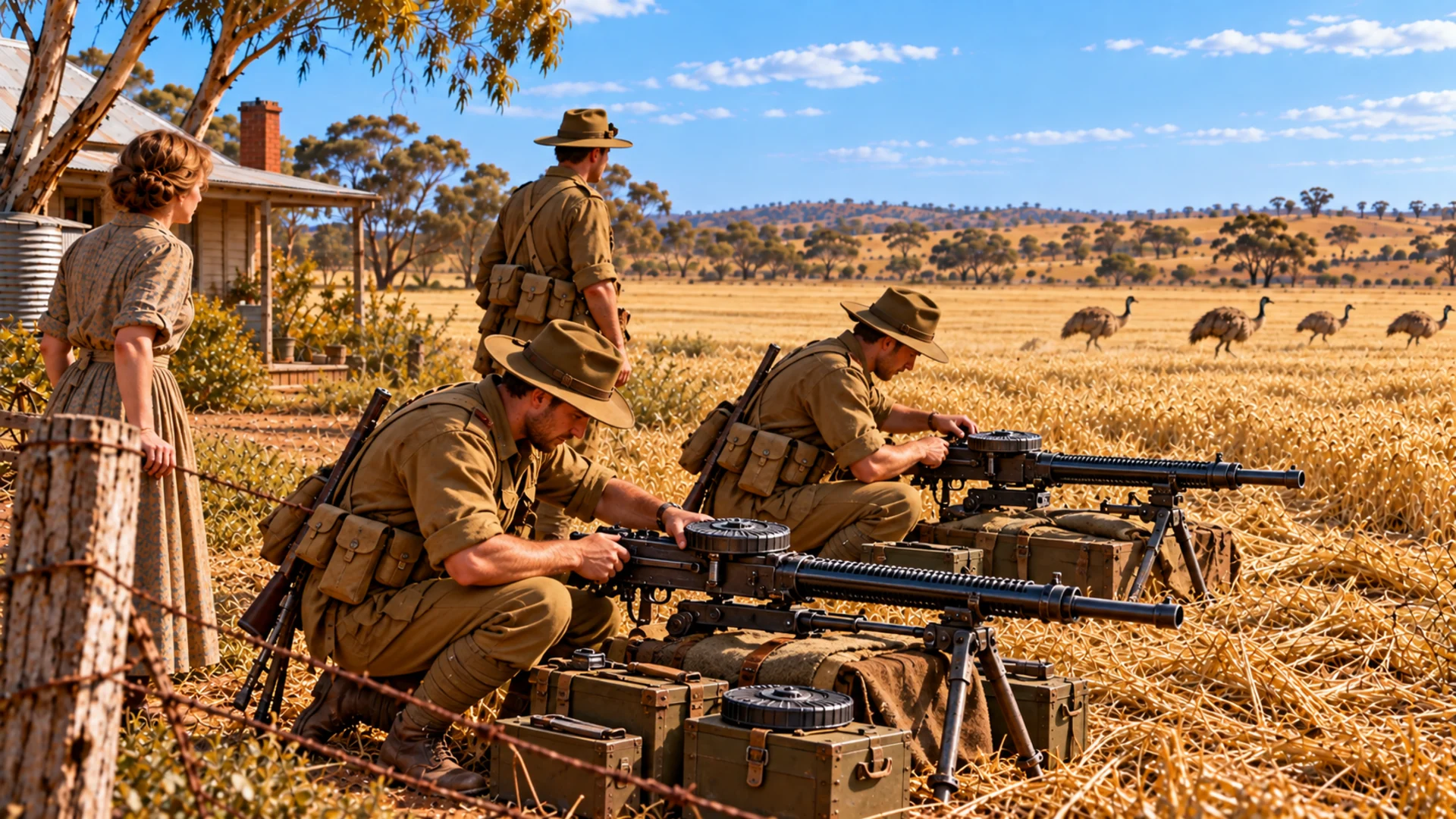
In November 1932, a small Royal Australian Artillery detachment led by Major G. P. W. Meredith arrived with two Lewis guns. The practical aim was to reduce the flocks reaching farms, with ambushes planned around places where birds gathered, including water points.
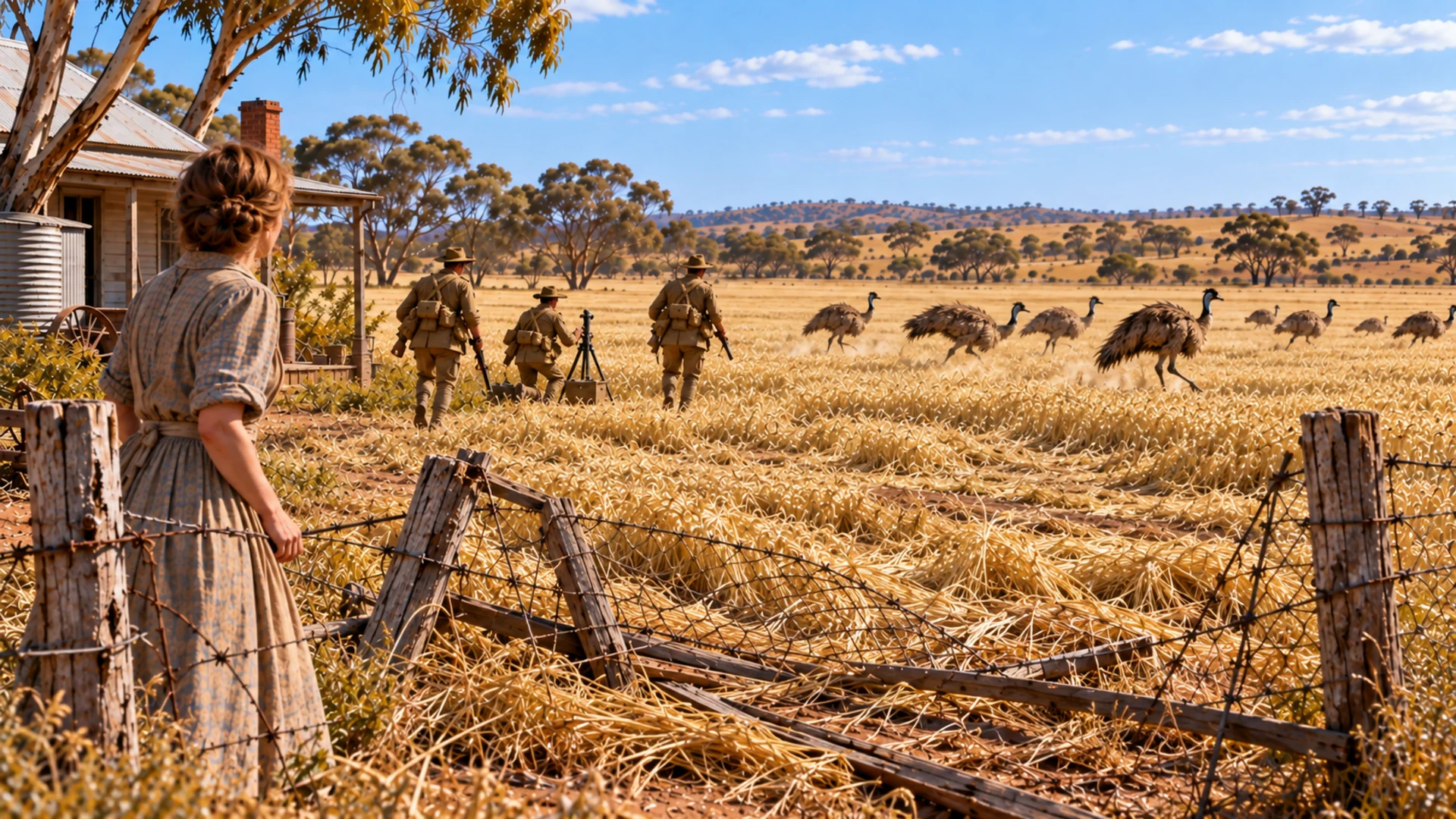
That approach depended on the emus staying together long enough to be found and targeted. They did not behave like a fixed formation. When people approached, groups could scatter across open ground, leaving the soldiers to search for smaller flocks and reposition across a wide landscape.
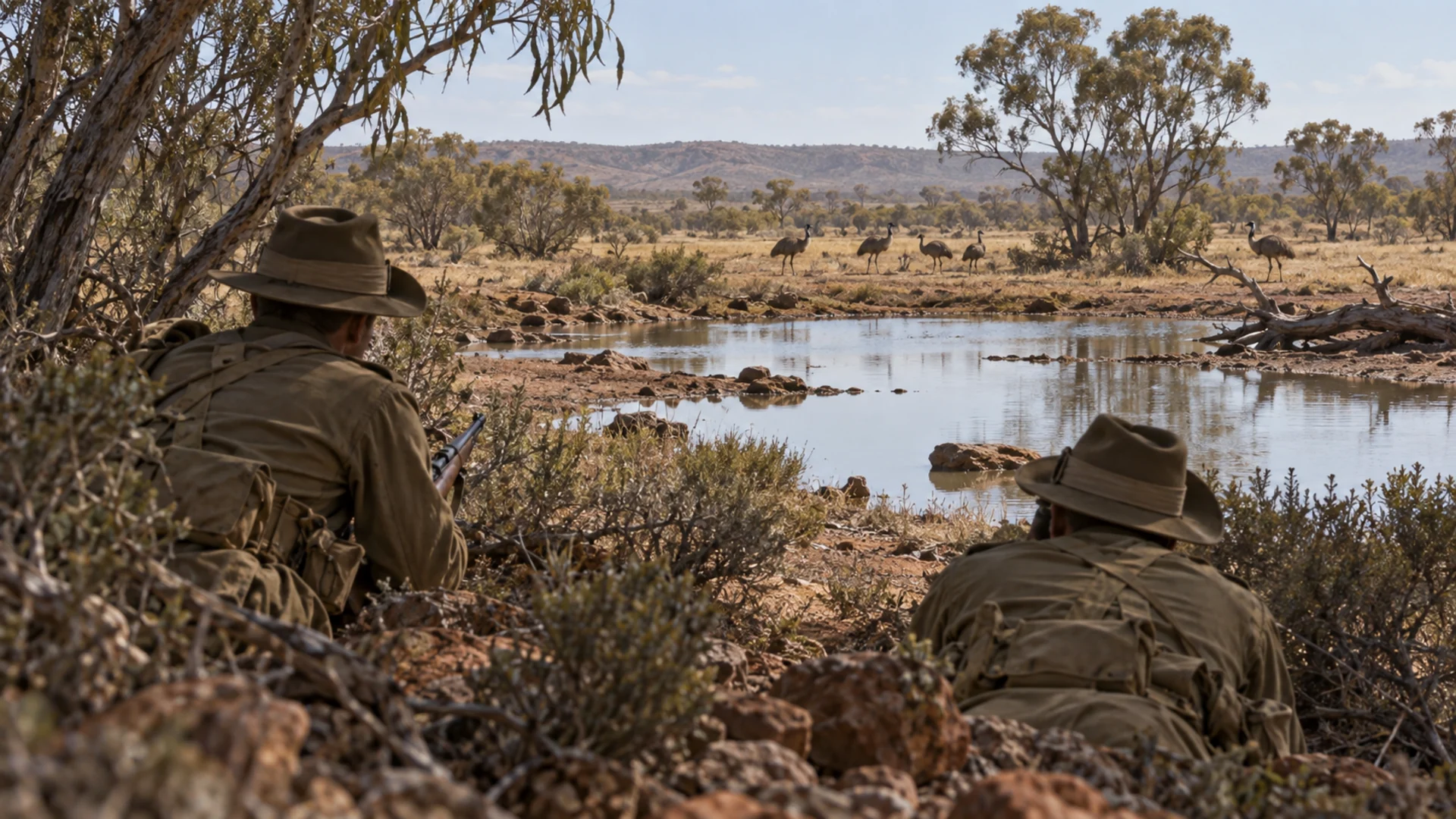
Australia did not formally declare war on the birds. The name grew from a wildlife-control operation that proved far more memorable than it was large.
The chase became the story
A contemporary report in the Daily Mercury on 26 November 1932 described machine gunners trying to reach emus near dams. It noted flocks of several dozen birds and said local settlers helped by not disturbing them before the gunners arrived. The report captures the operation as people at the time saw it, rather than through the later legend.
Other accounts describe a gun jamming and attempts that failed to produce lasting control. Birds were killed, but the detachment could not decisively contain the flocks. Numbers repeated in popular retellings vary, so a single figure should not be treated as a settled final tally.
The team also tried bringing a truck closer to the birds. Wheels did not make rough ground easy to cross, or turn a fast-moving, scattered flock into a stable target. The chase makes for a vivid image, but it still faced the same difficulty: finding the birds and keeping them together long enough to act.
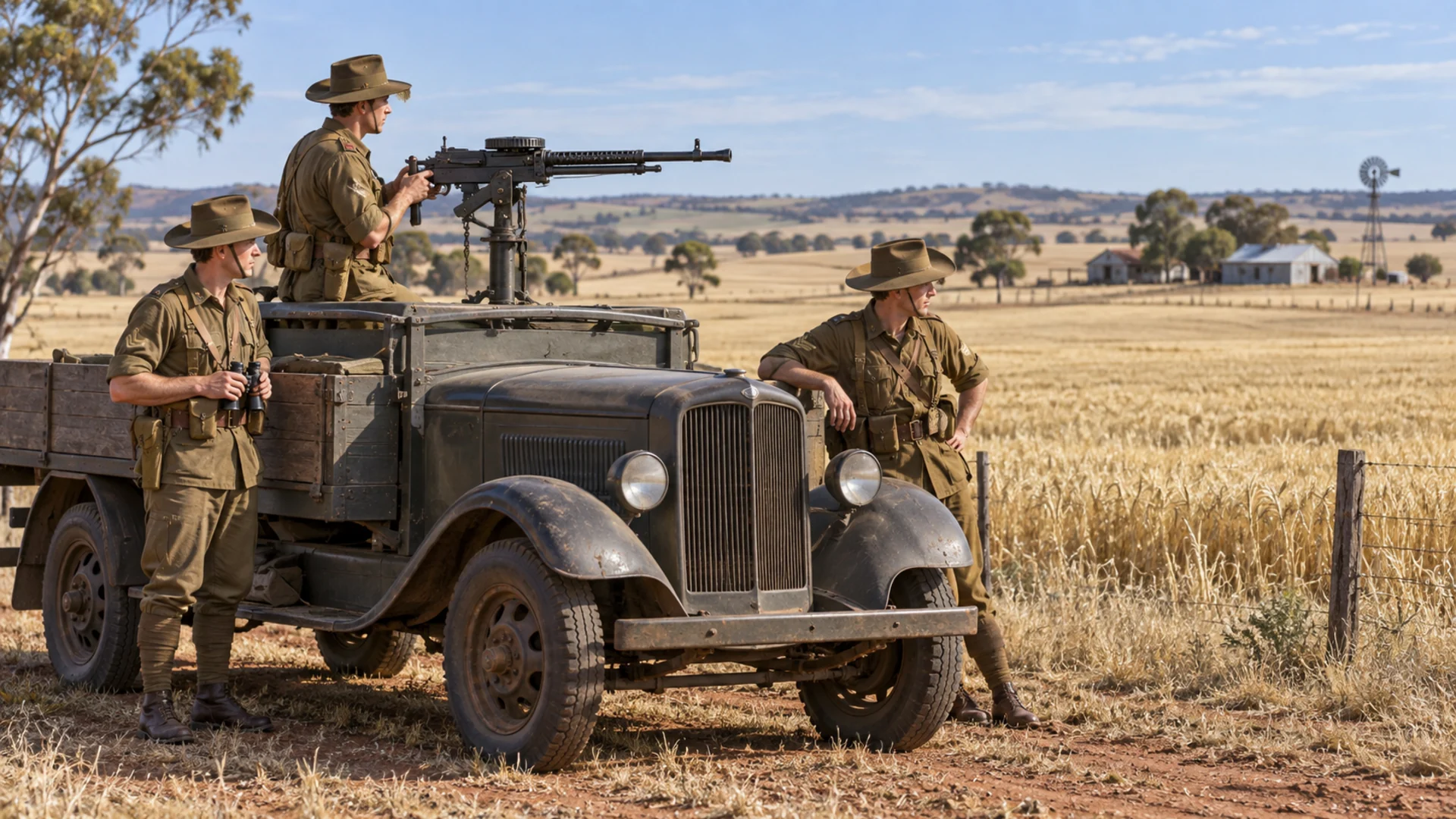
Withdrawal was not a victory ceremony
The military effort ended without delivering the result farmers had hoped for. That does not mean the emus won a battle or that Australia surrendered. It means a method built around concentrated fire was poorly suited to wildlife spread across open country.
The broader conflict between farming and wildlife did not end in 1932. The State Library of Western Australia’s archival record says farmers sought military assistance again in 1934, 1943, and 1948. The “Emu War” was one episode in a longer struggle over crop protection, not a single decisive contest.
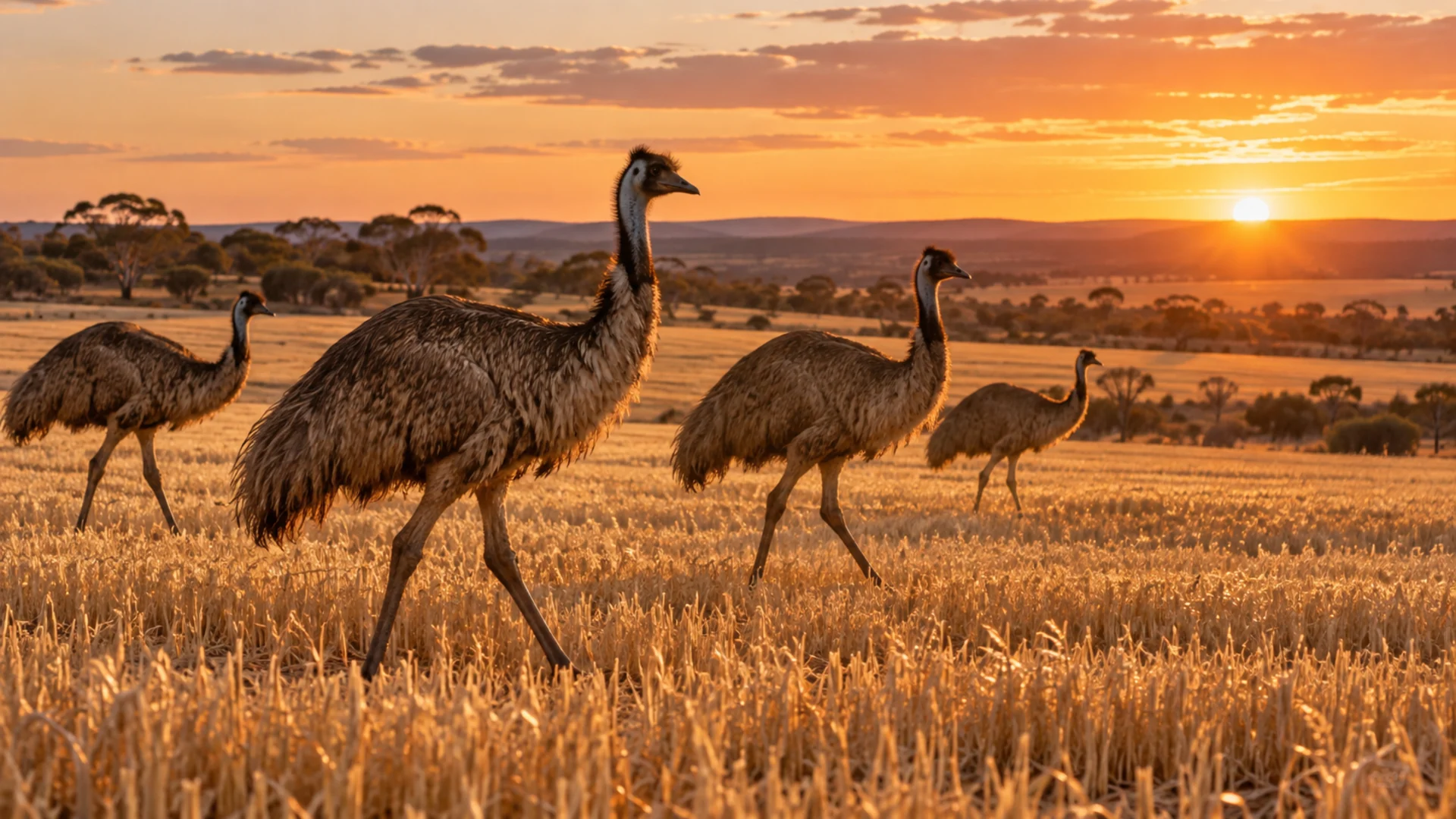
Why the story still works
The contrast is hard to forget: military weapons facing birds that did not behave like an army. Yet the episode needs no exaggeration to be compelling. Farmers had real crop losses, soldiers were given a concrete assignment, and the plan ran into the limits of terrain, distance, and flock behavior.
“Australia lost a war to emus” is a catchy line, not an accurate summary. The surviving record points to something narrower: an operation that failed to produce the control its backers wanted and was recast by newspapers and popular memory as an unlikely war.
Frequently asked questions
Did Australia declare war on emus?
No. “Emu War” is the ironic popular name for the 1932 control operation.
Why were soldiers sent?
Farmers around Campion asked for help limiting damage to their wheat fields. The government authorized a small military detachment with Lewis guns.
Did the emus win?
There was no formal victory on either side. The military team withdrew without achieving the expected level of control, and the agricultural problem continued in later years.
Sources and further reading
- National Library of Australia, Trove — “War on the Emu,” Daily Mercury, 26 November 1932
- State Library of Western Australia — archival footage record for the Campion operation
- Murray Johnson — “‘Feathered foes’: Soldier settlers and Western Australia's ‘Emu War’ of 1932,” Journal of Australian Studies
- Harbour Trust — Gwynydd Meredith biography and operation background