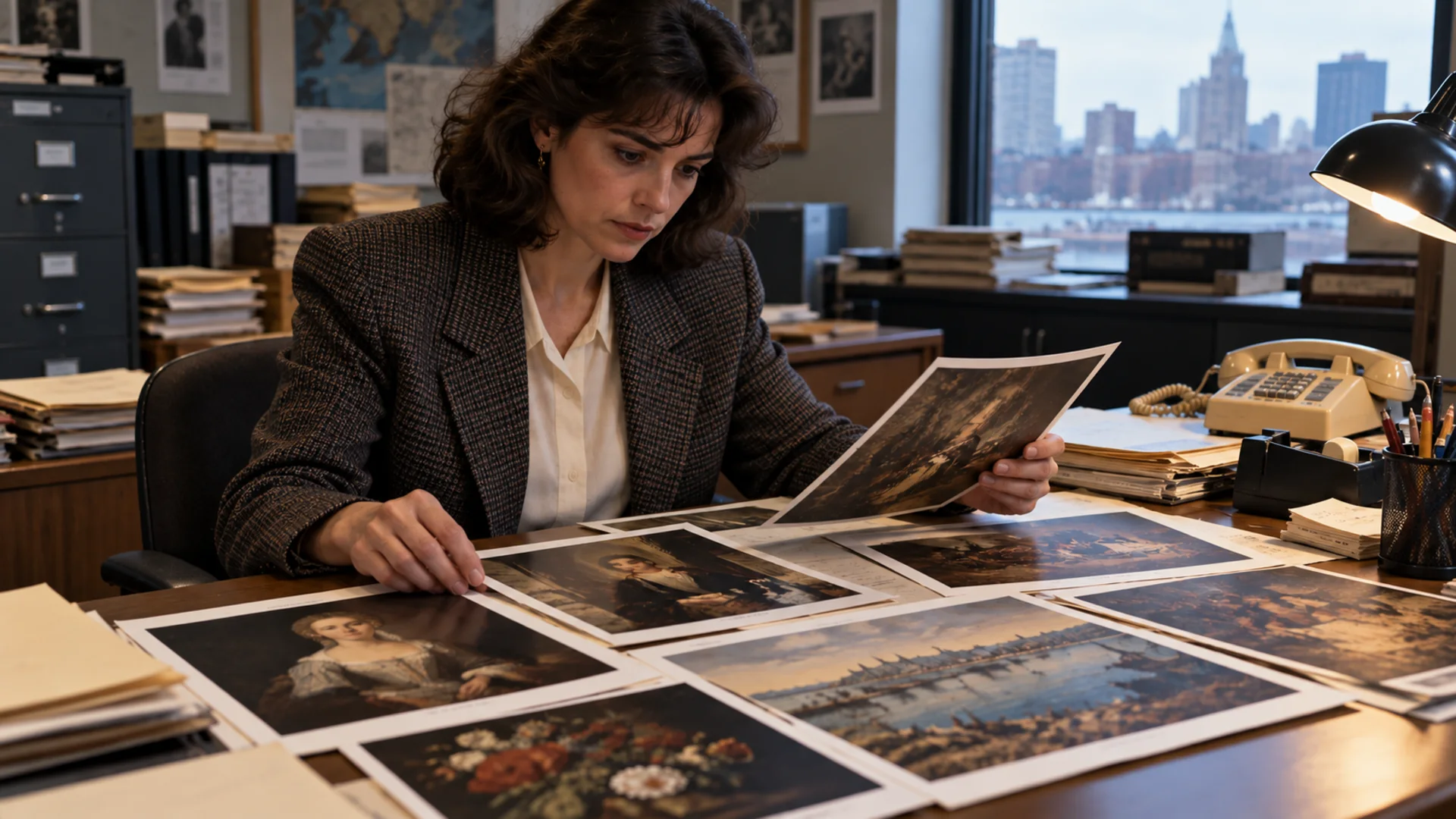
A pair of men walked into Boston’s Gardner Museum wearing police uniforms. Eighty-one minutes later, thirteen artworks were gone. The empty frames remain, while the trail ends somewhere beyond the museum walls.
The deception began at the door
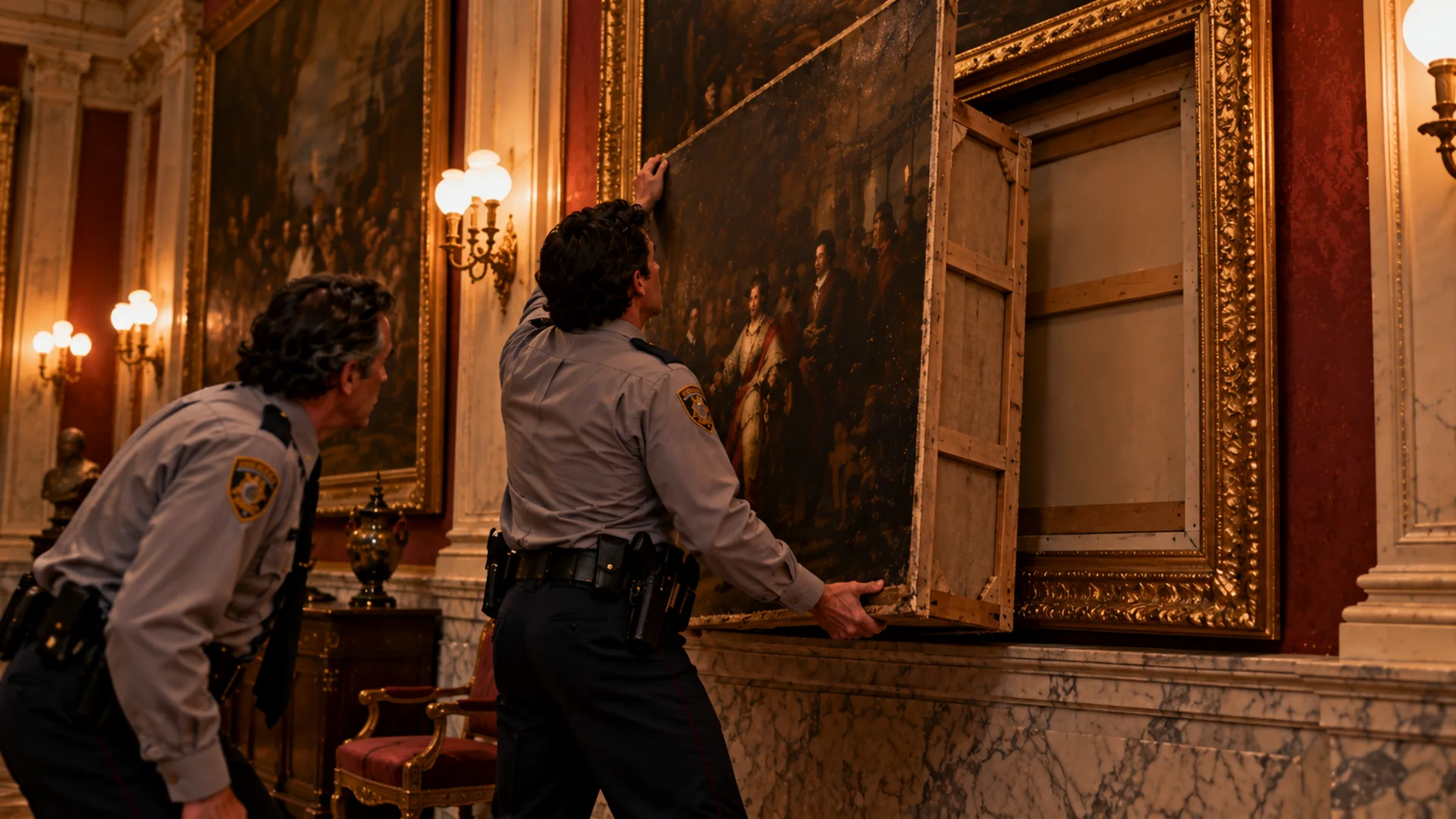
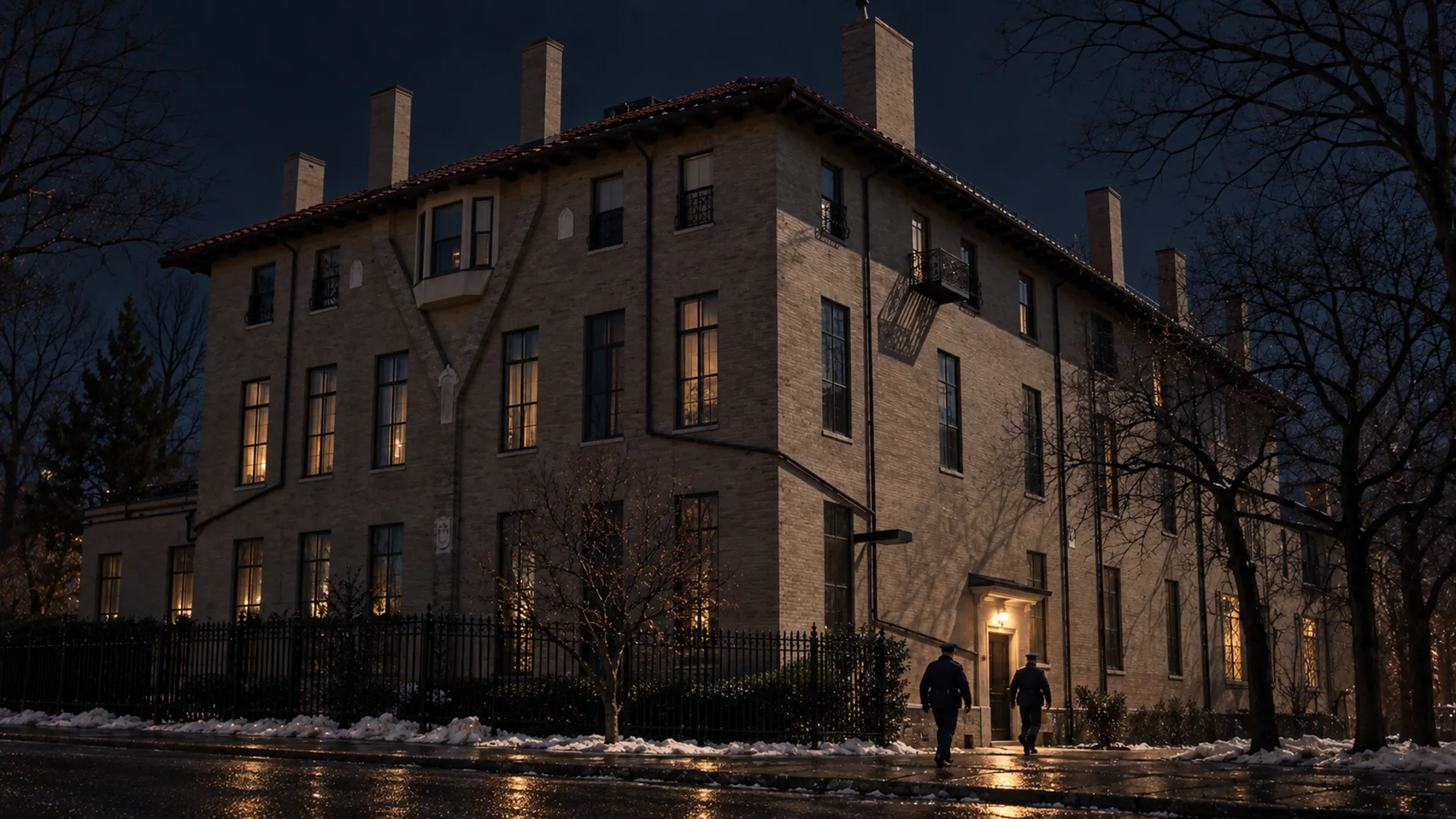
Just after midnight on March 18, 1990, two men rang the museum’s night bell and said they were responding to a disturbance. A guard let them through the employee entrance, against procedure. The claim of police business had opened the door; once inside, the men revealed the robbery.
They brought a second guard to the security desk, then took both employees to the basement and restrained them. Motion detectors recorded the intruders moving through the galleries. The museum’s official account places their departure at 2:45 a.m., after two trips to their car. In between, they had 81 minutes to choose what to take.
A collection reduced to missing places
The thieves targeted rooms on two floors. From the Dutch Room, they took Vermeer’s The Concert, works by Rembrandt and Govaert Flinck, and a small Rembrandt self-portrait etching. Five Degas works and a bronze eagle finial came from the Short Gallery; Manet’s Chez Tortoni was taken from the Blue Room. An ancient Chinese bronze vessel was among the objects as well.
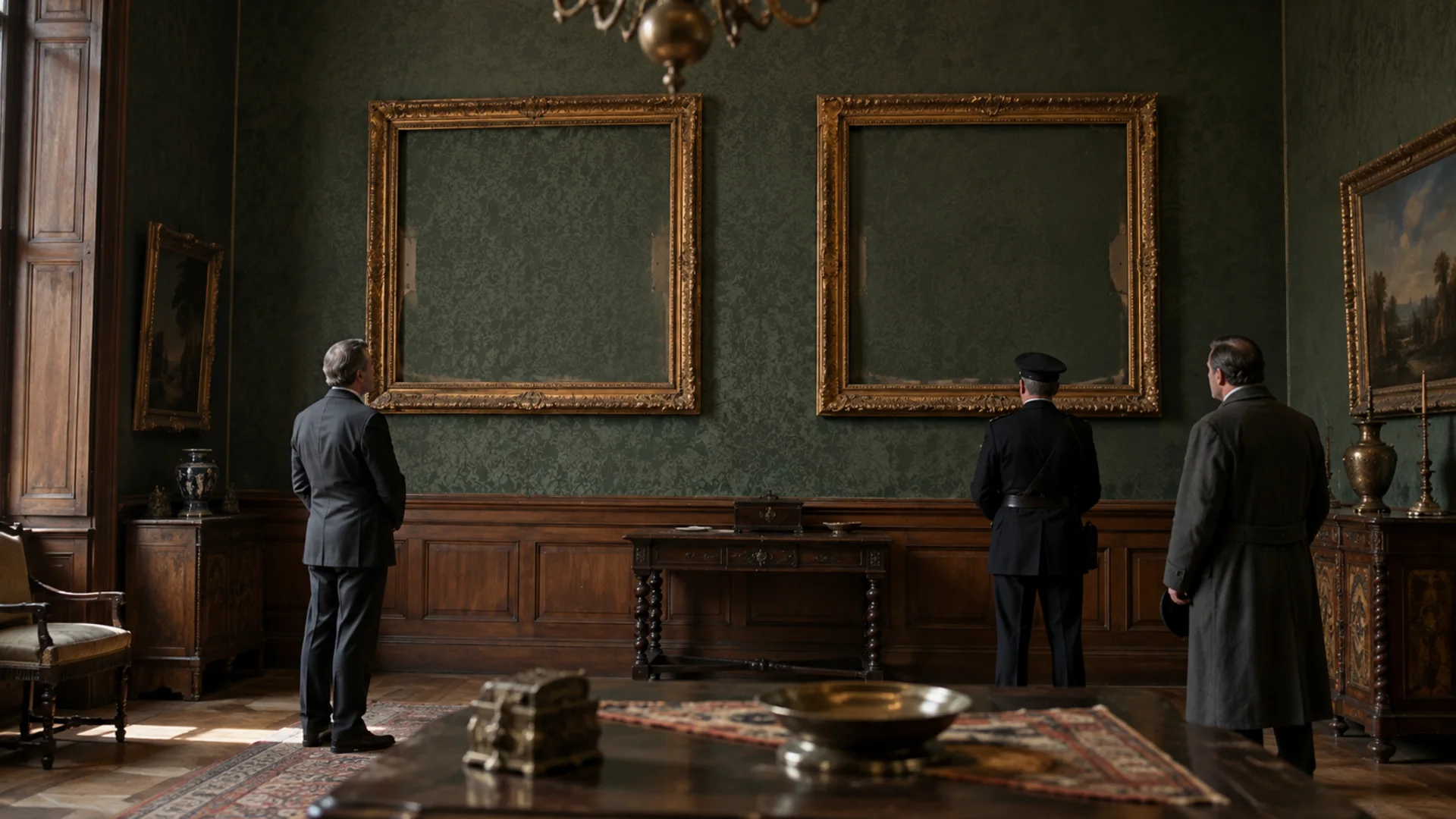
The method varied from piece to piece: some canvases were cut from their frames, while other works and objects were lifted out. The total was thirteen. Frames left on the walls turned the theft into a visible absence that could not be mistaken for a simple change in display.
two guards were restrained, thirteen works were taken, and the thieves left at 2:45 a.m. The works have not been recovered, and no one has been convicted for the theft.
What happened after the getaway?
The guards remained restrained until police arrived at 8:15 a.m. That gap tells us when the crime was discovered, but it does not identify the thieves or explain where the art went. The FBI says its investigation found that the stolen works were separated after the robbery and could now be anywhere in the world. It has also described possible movements along the East Coast; those leads do not amount to a confirmed route for every piece.
Over the years, names, sightings, and theories have circulated. A rumor may point investigators toward a lead, but it is not proof of who planned the theft or who possesses the paintings today. The public record still leaves the central questions unresolved: who arranged the operation, where did the objects travel, and can any of them still be found?
The museum chose not to hide the loss
In 1994, the Gardner Museum placed the empty frames on display as a continuing reminder of the stolen works and the hope that they might return. Visitors encounter both the objects that remain and the spaces left behind by the missing ones.
The FBI and the museum continue to seek information. Neither has announced a definitive account of what happened to all thirteen pieces. We can reconstruct the breach, the guards’ restraint, the rooms visited, and the time of departure. The last chapter is still missing: the paintings have never come home.